Chasing the Light
Politics and science contend with the end of summer.
25 October 2026
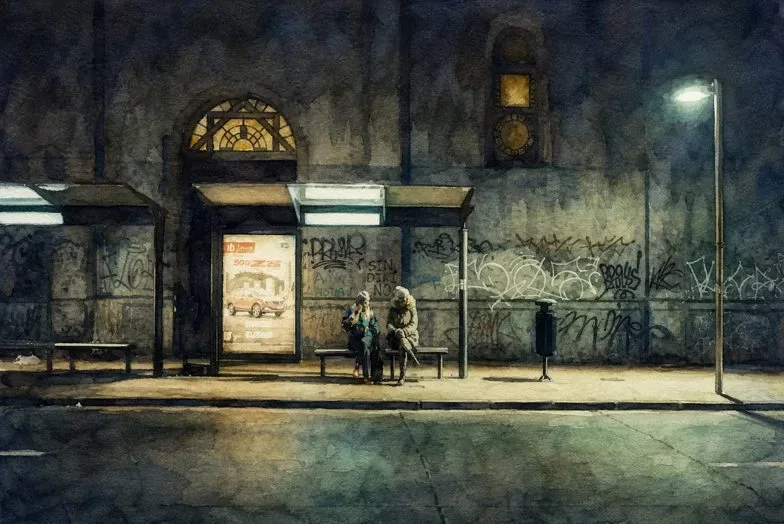
On Sunday, November 1, Americans will perform a peculiar act of collective obedience. At two o'clock in the morning, they will turn back their clocks, reclaim an hour of sleep, and surrender an hour of evening sunlight. The sun, indifferent to the arrangement, will rise and set precisely as it intended. It is a ritual inherited from another century, when electricity was expensive, daylight was an economic resource, and the industrial world believed that almost anything could be improved by adjusting the machinery. Even time.
President Donald Trump wants to end the practice. And on this particular question, he may have a point. The twice-yearly changing of clocks has long been defended as an exercise in energy conservation, economic efficiency, and the sensible management of daylight. But the technological circumstances that inspired it have changed almost beyond recognition. We illuminate cities throughout the night, conduct business across continents in milliseconds, and manufacture artificial daylight at the touch of a switch. Yet twice a year, we continue to rearrange the national clock.
The House of Representatives has voted to end the ritual through the Sunshine Protection Act, which would establish permanent daylight saving time across most of the country. Trump has urged the Senate to follow, encountering resistance from members of his own party, including Senator Tom Cotton of Arkansas. The disagreement is not simply whether Americans should stop changing their clocks. It is which version of time they should inhabit. And that is where the science becomes inconvenient.
Sleep researchers generally favor permanent standard time, which more closely follows the natural cycle of morning sunlight and evening darkness. Permanent daylight saving time would eliminate the seasonal disruption, but it would also push winter sunrises later into the morning. For commuters, schoolchildren, and anyone whose working day begins before dawn, the distinction is considerable. The president's objection to changing clocks may therefore be sound, even if the legislation he supports is not necessarily the best remedy. It is a rare political argument in which both sides may be right about the problem and wrong about the solution.
For most of human history time belonged to the heavens.
Noon arrived when the sun reached its highest point. Farmers, merchants, and travelers organized their days according to the movement of light across the landscape. A town's clocks might differ from those of another town a few miles away, and the discrepancy mattered little. Then came the railroads. By the nineteenth century, industrial civilization had developed an urgent need for precision. A train leaving one city could hardly be expected to arrive safely in another if each station observed its own version of noon.
In Britain, railway companies increasingly adopted Greenwich time. In America, the railroads established standardized time zones in 1883, replacing a patchwork of local customs with a system capable of coordinating a continent. The telegraph carried the hour across vast distances. Factory whistles divided the working day. Railway timetables imposed order upon geography. The clock had become an instrument of industrial progress.
In 1918, Congress formally established standard time zones and introduced daylight saving time as a wartime measure. By advancing the clock during the warmer months, policymakers hoped to shift an hour of usable daylight into the evening and reduce demand for artificial lighting. It was an ingenious accommodation to the circumstances of the age. It did not, of course, produce another minute of daylight.
It merely persuaded the nation to get up earlier.
The distinction might have amused Benjamin Franklin, who in 1784 published a satirical letter in the Journal de Paris suggesting that Parisians could conserve candles by rising with the morning sun. Franklin did not propose moving the hands of clocks. His target was human habit: the curious willingness of civilized people to spend money illuminating the night while sleeping through the daylight available to them free of charge. More than two centuries later, we have perfected the technology of artificial light without entirely resolving the question of when we ought to be awake.
America has already experimented with making daylight saving time permanent. During the energy crisis of 1973, Congress authorized a year-round arrangement intended to reduce fuel consumption. The experiment began in January 1974 amid considerable public enthusiasm. But the consequences soon became apparent. Children waited for school buses in darkness. Commuters began their journeys before sunrise. What had seemed an elegant solution to an energy problem became a less attractive proposition when confronted with the realities of a winter morning. Public support deteriorated, and Congress ended the experiment early.
Half a century later, Washington is revisiting essentially the same proposition, though the economic landscape has changed dramatically. Electric lighting is vastly more efficient. Commercial activity extends well beyond daylight hours. Computers, telecommunications, and automated systems operate independently of the sun. Even the traditional boundaries between work and leisure have become increasingly porous. The economic advantages of shifting daylight are consequently less straightforward than they once appeared. Research into energy savings has produced mixed results, with benefits varying according to climate, geography, and consumption patterns.
There are still arguments for brighter summer evenings. Retailers welcome them. Recreational businesses benefit from them. Families enjoy the additional daylight after work. But preference is not necessity. And the human body, unlike the modern economy, has not been redesigned to operate around the clock.
Beneath the sophistication of contemporary civilization lies an ancient biological mechanism. Circadian rhythms govern the recurring cycles of sleep and wakefulness, hormone production, metabolism, body temperature, and alertness. These processes evolved in response to the Earth's rotation and the dependable alternation of daylight and darkness. Morning sunlight is one of the body's most powerful signals for setting its internal clock.
The abrupt spring transition to daylight saving time has been associated with sleep disruption and short-term increases in certain health and safety risks. More broadly, persistent misalignment between biological rhythms and social schedules has been linked to adverse physical and psychological outcomes. The science requires care. Not every illness associated with circadian disruption can be attributed to seasonal clock changes. Nor does eliminating those changes automatically resolve the larger problems of inadequate sleep, irregular working hours, and excessive exposure to artificial light. Nevertheless, the evidence raises an uncomfortable question: If the purpose of modern technology is to improve human life, why do we continue asking human biology to accommodate an increasingly unnecessary mechanical ritual?
The irony is particularly American. We standardized time to make the railroads run. We adjusted it to conserve energy. We reorganized it around the factory, the office, the marketplace, and the demands of industrial civilization. And now, having constructed a society capable of operating at any hour, we are discovering that our bodies still prefer to know when morning begins.
William Faulkner understood that the measurement of time and the experience of living are not necessarily the same thing. "Clocks slay time," he wrote. "Time is dead as long as it is being clicked off by little wheels; only when the clock stops does time come to life." It is a sentiment that seems almost subversive in a civilization governed by schedules, deadlines, appointments, and the relentless accounting of productive hours. But Faulkner was not proposing that humanity abandon its clocks. He was questioning the assumption that measuring life is equivalent to living it.
There is a similar distinction in the present debate. Ending the seasonal clock changes would not represent a retreat from modern civilization. It might instead acknowledge that an arrangement devised for the economic conditions of another era deserves reconsideration in light of contemporary science. The question is whether Congress can distinguish between the convenience of longer evenings and the biological value of morning light. But before Washington can resolve that question, it must confront another: the approaching midterm elections.
Trump's ambition to end the seasonal clock changes now faces an uncertain political future. With the legislation stalled in the Senate, the November elections could further complicate his plans if control of either chamber changes hands. Even a Republican victory would not resolve the deeper disagreement over which time Americans should permanently observe.
For generations, Americans have moved their clocks forward and backward in pursuit of an elusive advantage: greater efficiency, lower costs, longer evenings, and a little more daylight at the end of the working day. But the clock has never governed the sun. It has only governed our relationship to it. And perhaps that is the lesson concealed within this peculiar national ritual. We invented clocks to measure the passage of time, then began adjusting them to suit the demands of civilization.
The hands may stop changing. The daylight will not.